
Report
Captured: 2026 Expense Trends Revealed
Insights from nearly one million expense claims on how UK organisations are moving from expense administration to expense intelligence.

Get the report
Tell us where to send it and it is yours.
Loading the form…
From expense administration to expense intelligence
This report analyses expense claims submitted through Capture Expense between January 2025 and June 2026. It’s the second edition, so for the first time the data shows what has changed since the 2025 report, and what hasn’t. Over the 18 month period, we analysed:
- 978,036 expense claims
- £49 million+ in business spend
- 631 organisations
Three changes stand out against last year’s figures.

Some things haven’t changed. Britain still travels for work, and mileage still leads by some distance. What’s new is that reliable data is reaching finance teams faster.
This report is designed to help finance professionals:
- Understand how expense behaviour is changing across UK organisations
- Identify where risk and compliance gaps still exist
- See how AI and automation are changing the finance function
- Move from processing expenses to understanding them
Approvals: from slow burns to same-day decisions
In 2025, just 2.6% of claims were approved immediately. This year, it’s 26.8%, one of the biggest shifts anywhere in the report. Claims taking more than 30 days fell from 26.6% to 3.4%: from more than a quarter of claims to closer to one in thirty. For finance teams, that makes cash flow forecasting far more predictable.
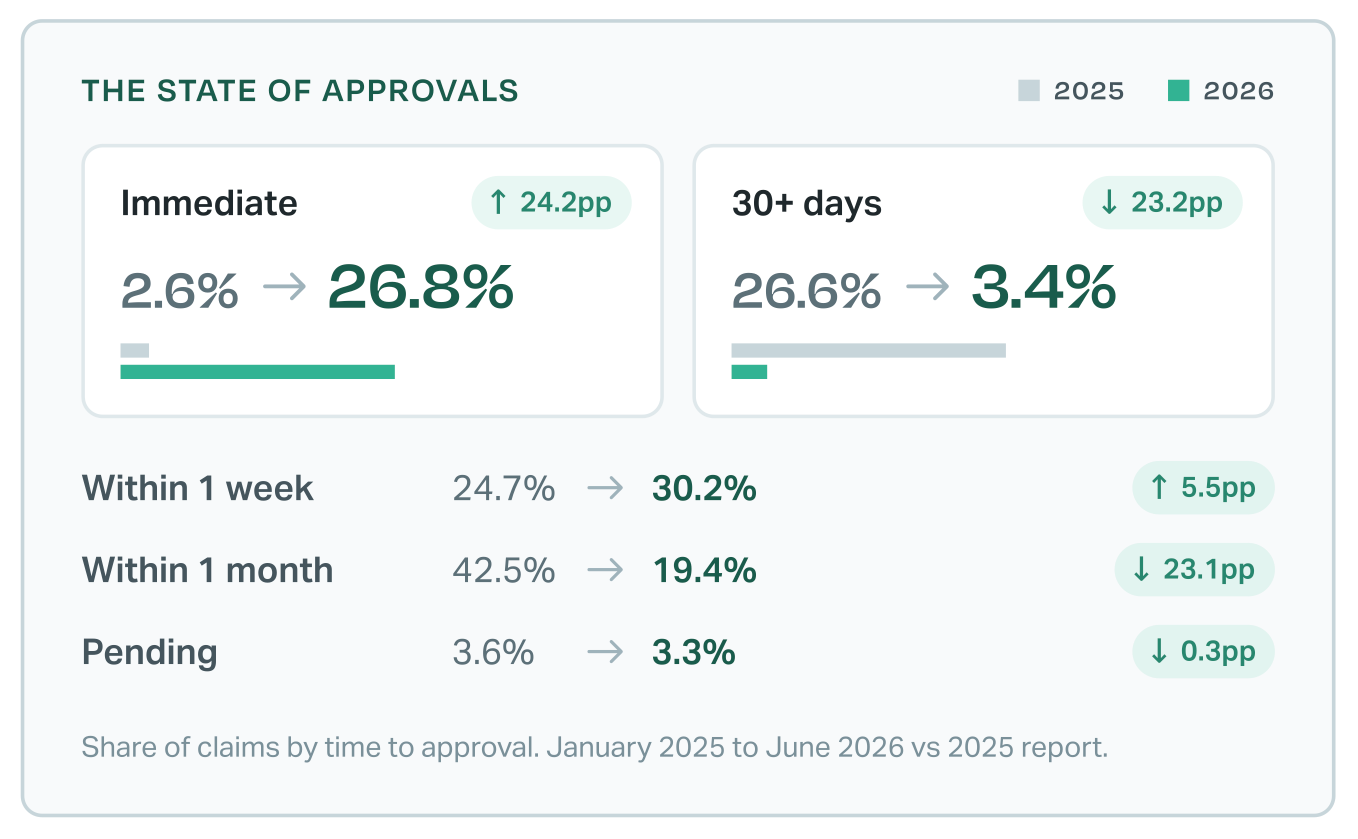
Some of the improvement is behavioural: employees know what a complete claim looks like, with the right receipt attached straight away. Some is structural: AI is flagging issues earlier, before a claim reaches a human approver.
“Organisations are simply getting better at this. Employees understand what a compliant claim looks like, systems are catching problems earlier, and approvers aren’t wading through the same volume of avoidable admin. It’s a maturing process, not a lucky quarter.”
James Rowell, Founder, Capture Expense
What people are really spending money on
Britain remains a nation on the move
Mileage is still the most-claimed category by some distance, with 226,508 claims and £4.53 million in spend. Travel, fuel and parking feature heavily too, reflecting the sectors Capture Expense works with most: construction, engineering and education.
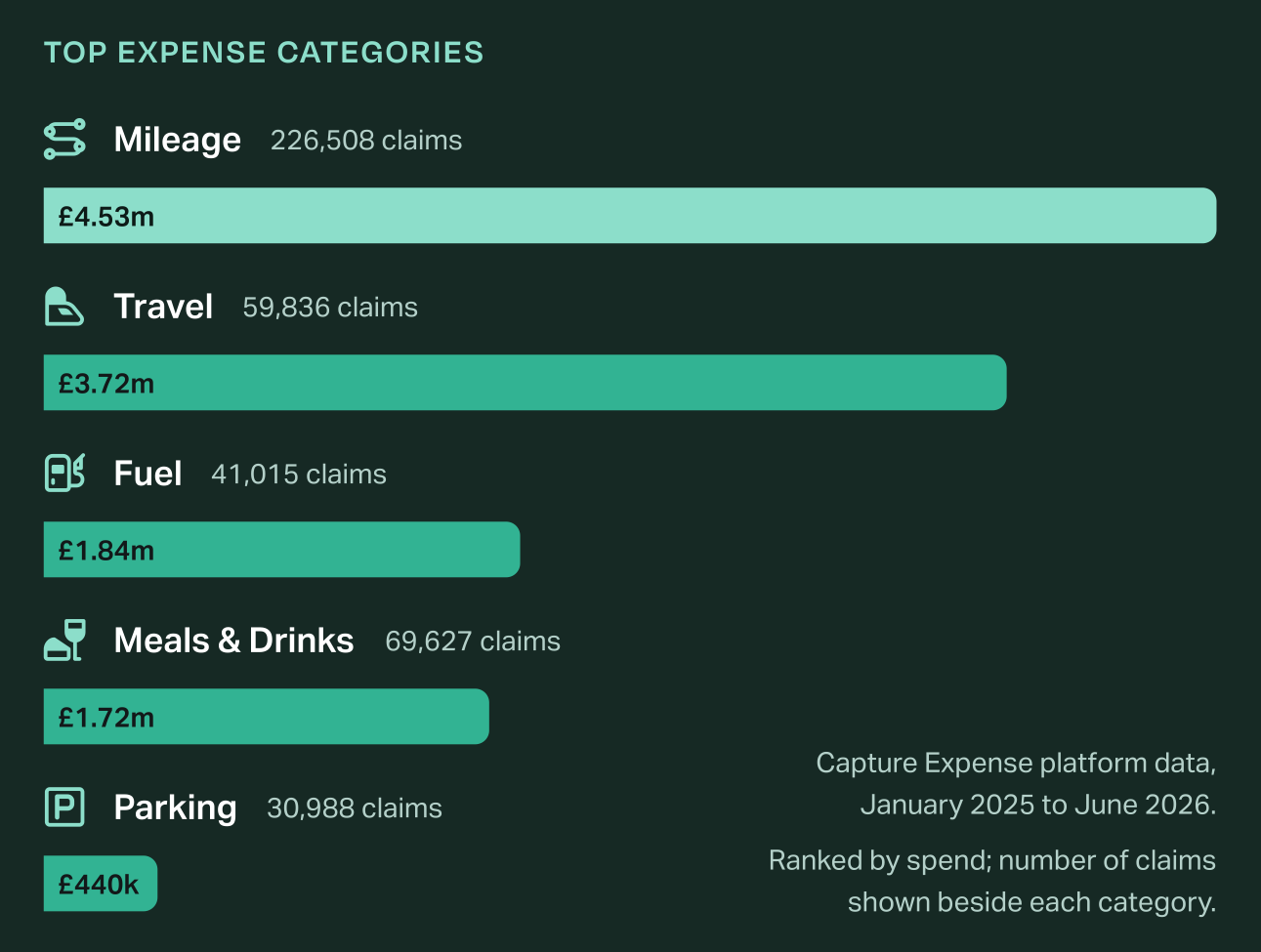
The challenge for finance teams isn’t stopping people travelling. It’s understanding where that spend concentrates. With £4.53 million going on mileage, is it time to review vehicle policies or introduce electric vehicle (EV) salary sacrifice schemes that may reduce long-term costs?
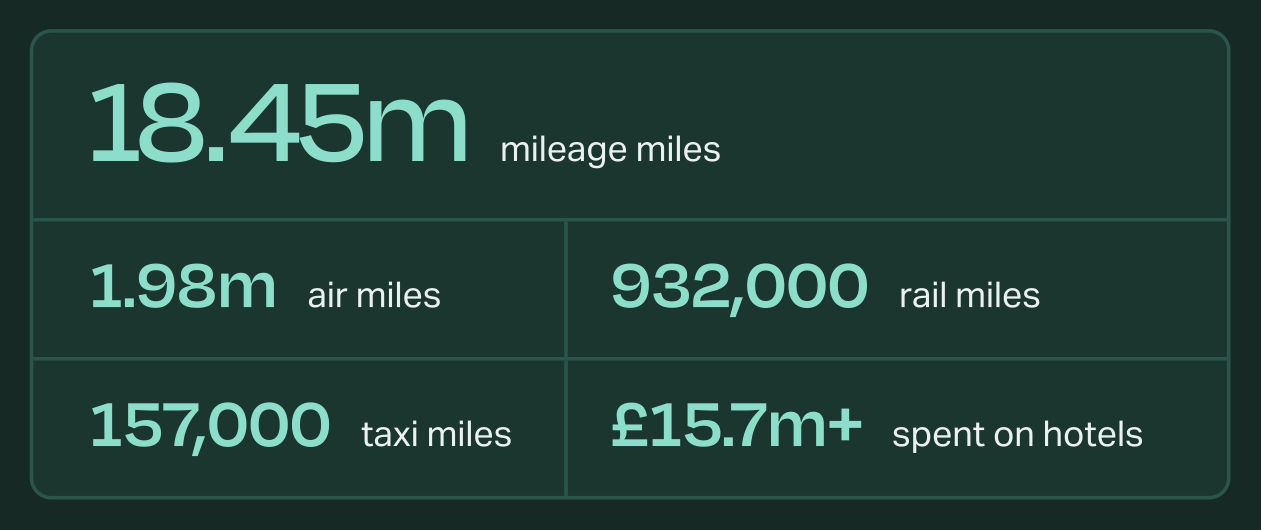
During the reporting period, organisations recorded:
Expense behaviour: the everyday habits worth watching
Some patterns feel familiar. Others say something newer about how, and when, work happens.
| Habit | The figure | What it suggests |
|---|---|---|
| Late-night travel | 15,834 Uber trips after midnight, up from 4,400 the previous year | The working day doesn’t always end when the office does, which matters for wellbeing as much as expense policy |
| Coffee | 16,000+ claims at Starbucks, Pret A Manger, Greggs, Costa and Caffè Nero | Long days on the road, fuelled between meetings |
| Rail booking | 7,235 Trainline claims, the most frequently claimed merchant | Convenience beats the discount; corporate train accounts or booking rules could save money |
| Fast food | 4,746 McDonald’s claims, ahead of Pret A Manger (3,816) and Greggs (3,688) | On the road, speed decides where people stop |
| Client entertainment | 8,047 claims from professional services firms, more than any other sector | Plenty of relationships are still won in person |
Sector spotlight
Education: 63,444 travel claims
Education submitted more travel claims than any other sector. Training days, multi-site roles and cover across campuses all have to be tracked against strict funding rules. Education finance teams can’t simply log a cost: they need to allocate it to the right budget line, funding source and audit trail, every time.
Construction and engineering
Alongside professional services, these are the sectors with the highest levels of alcohol-related entertainment spend. Across the data, Sales recorded the highest spend of any department, at £8.4 million: in industries built on tenders and contracts, trust still gets built over a meal or a drink. Crews, supervisors and field engineers are rarely at a desk long enough to file an expense, which makes real-time capture essential.
Rejections are falling
With more organisations and more claims, you’d expect rejections to climb. Instead, the rejection rate fell from 2.91% to 2.26%, even as the platform processed claims from far more organisations than in 2025. It’s not a dramatic fall in percentage terms, but a falling rate across a larger, more varied customer base points to organisations getting better at compliance.
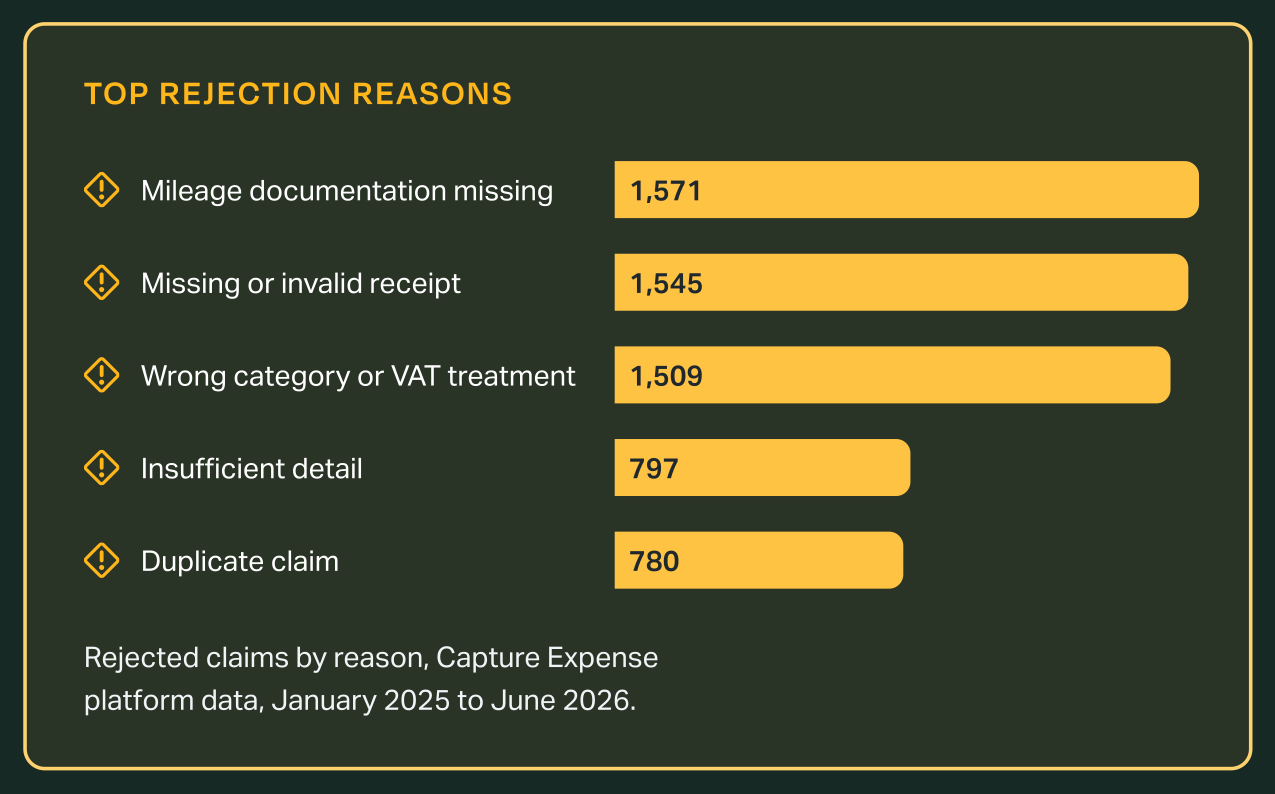
Two factors are behind the improvement:
- Smarter policy controls catch non-compliant claims before they’re submitted
- More experienced users know what information an approver needs to see, and what will get rejected
“What we’re seeing is less about isolated fixes and more about organisations building compliance into the moment a claim is created, rather than catching problems after the fact. That shift from correction to prevention is exactly what we’d expect to see as digital expense processes mature.”
Callum Beckwith, Technical Lead, Capture Expense
The compliance challenge
Missing receipts remain the biggest headache for managers and finance teams. Even against this year’s improvements:
- 2.68% of claims were submitted without a receipt attached
- 7.98% contained vague or incomplete descriptions
- Travel remains the category most likely to be rejected
Most rejected claims come down to missing information, not deliberate misuse. A receipt not attached, a description too vague to be useful, a claim filed under the wrong category. Individually, these are small oversights. Multiplied across thousands of submissions, they drain finance capacity.
“Finance teams rarely spend their time investigating fraud. Far more often, they’re simply trying to work out what a claim was for and where they should assign it. Getting the basics right, consistently, is still the single biggest lever most organisations have.”
James Rowell, Founder, Capture Expense
How Capture Expense helps reduce rejected claims
- Smart prompts encourage the right information at the point of submission
- Mandatory receipt and policy controls stop incomplete claims going anywhere
- Automated compliance checks flag issues before an approver sees them
- AI-powered reviews support value added tax (VAT) validation, receipt verification and policy enforcement
AI joins the finance team
This year, 14% of all claims were reviewed by AI before they reached a human approver. Historical and related-approval comparisons made up the largest share of those reviews, followed closely by VAT checks and receipt checks: the repetitive checking that used to take hours of a finance team’s week.
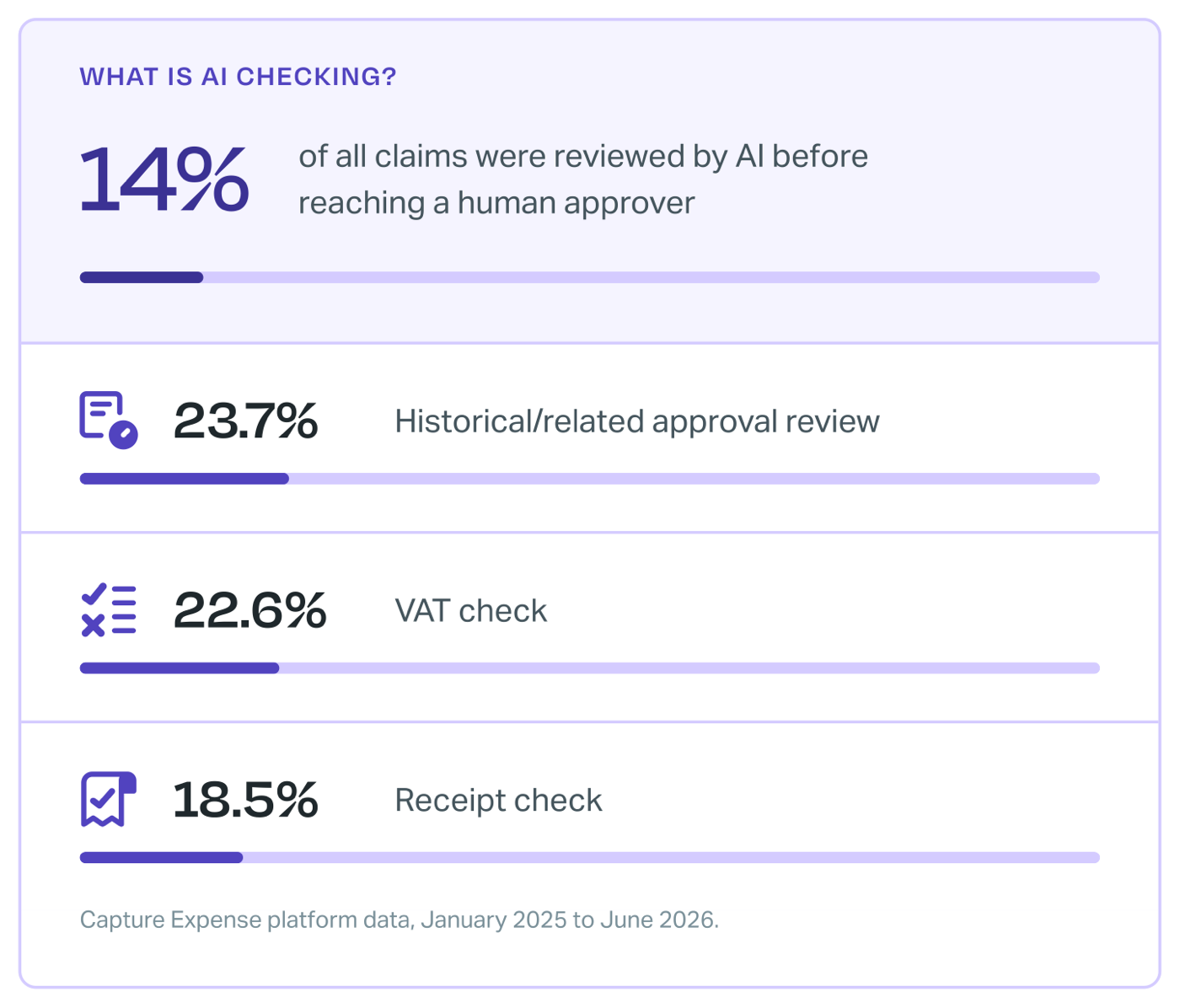
It hasn’t been a year of blind AI adoption. Regulators are asking harder questions about auditability, and businesses are more selective about which tools they trust with financial data.
“Automation only works when the underlying controls are sound. We’d encourage any finance team adopting AI-driven tools to start narrow—mileage calculations, invoice capture—and make sure every system is compliant, auditable, and backed by human oversight.”
Callum Beckwith, Technical Lead, Capture Expense
Getting things right first time
For years, expense compliance worked in reverse: a claim is submitted, something’s missing, a follow-up email goes out, the claim stalls and the cycle repeats. More organisations are now getting claims right before submission, through clearer policy, built-in controls and automated checks.
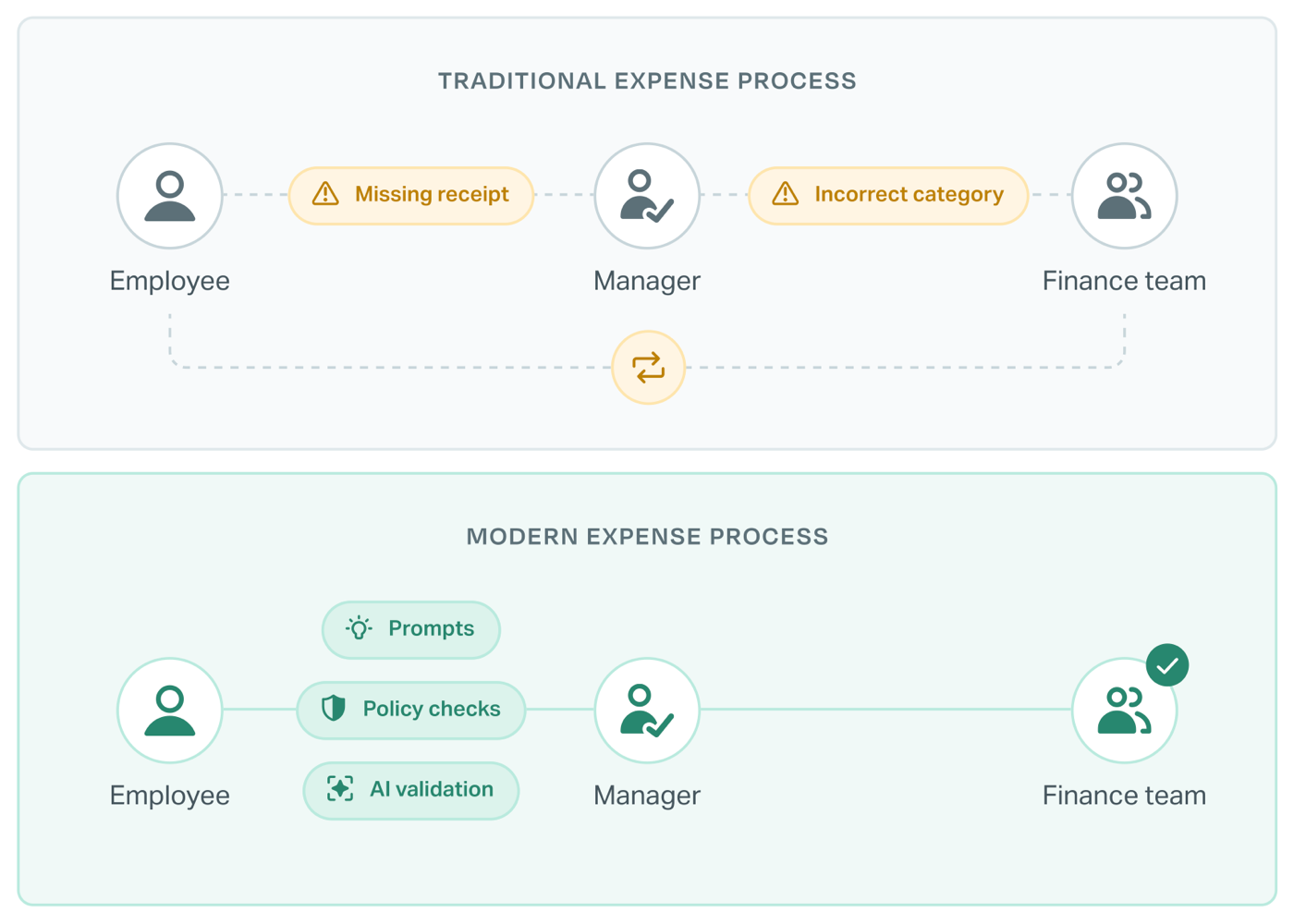
As routine checks run in the background, finance teams can spend their time on the questions that need a person: why spend is rising in a department, what an unusual pattern might indicate, and where savings can be made.
Work from home and ESG: the changing face of spend
The work from home reset
Research from the Chartered Institute of Personnel and Development (CIPD) puts hybrid working at 74% of organisations, down from 84% in 2023. Yet just 4% of organisations using Capture Expense reimbursed work from home (WFH) expenses this year, down from 7% in 2025.
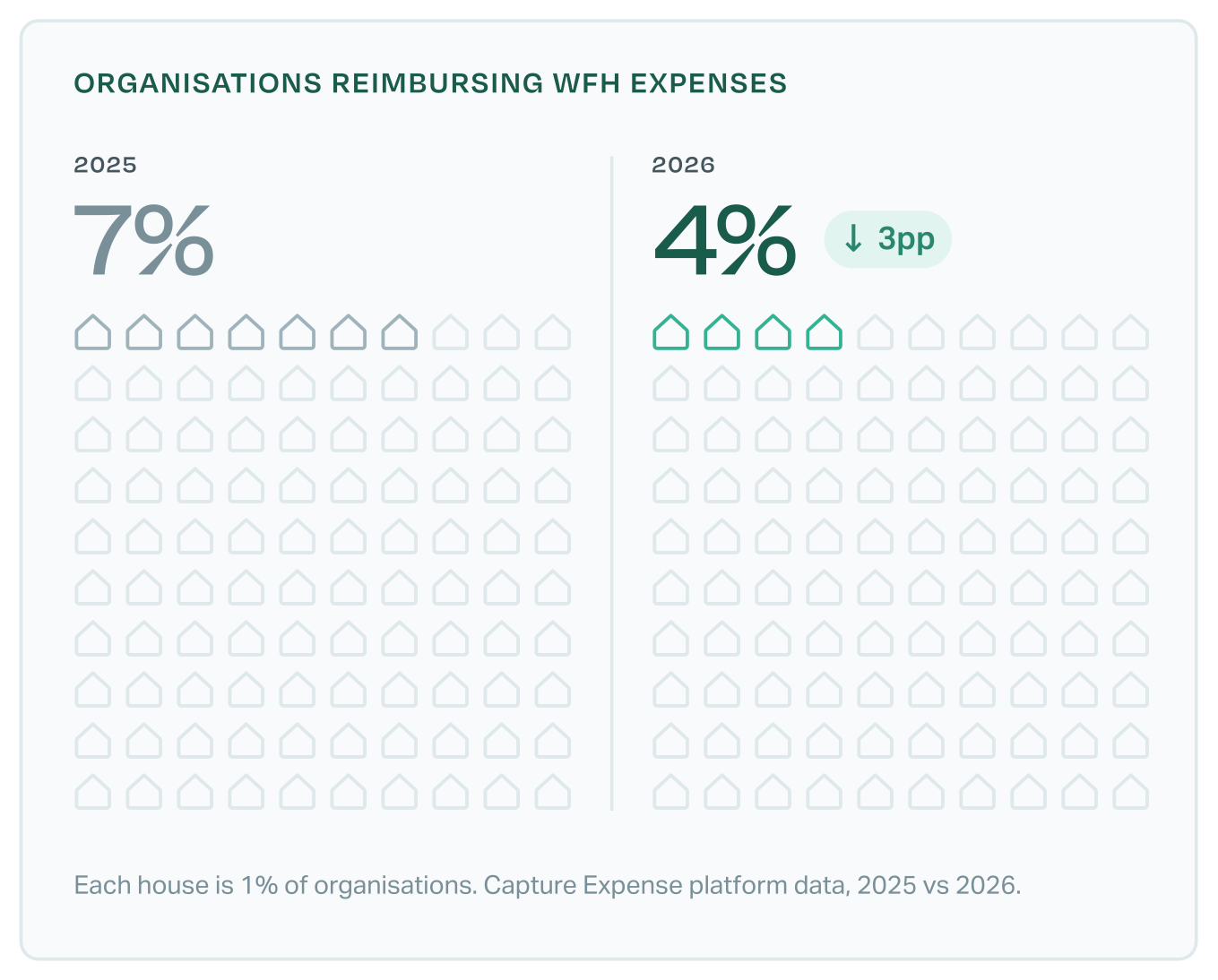
That’s not necessarily a retreat from flexible working. Many organisations using Capture Expense operate in construction, engineering and education, where people are on site or travelling between locations far more often than they’re at a home desk.
ESG moves from ambition to accountability
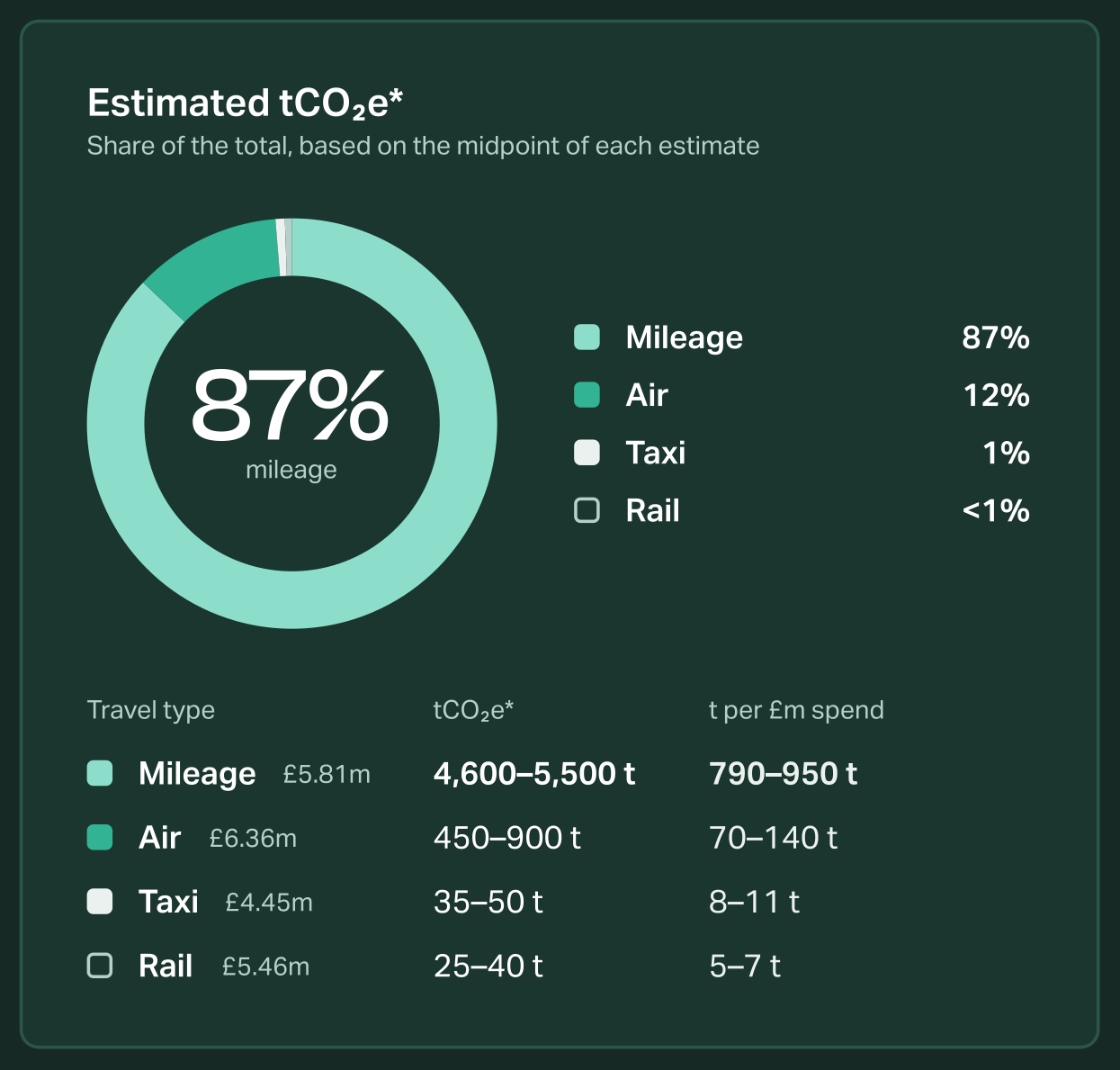
Environmental, social and governance (ESG) disclosure expectations are tightening, so businesses need accurate data captured at the point a cost is incurred, not reconstructed months later. Car travel remains the dominant mode of domestic business travel, for the door-to-door flexibility that public transport can’t match.
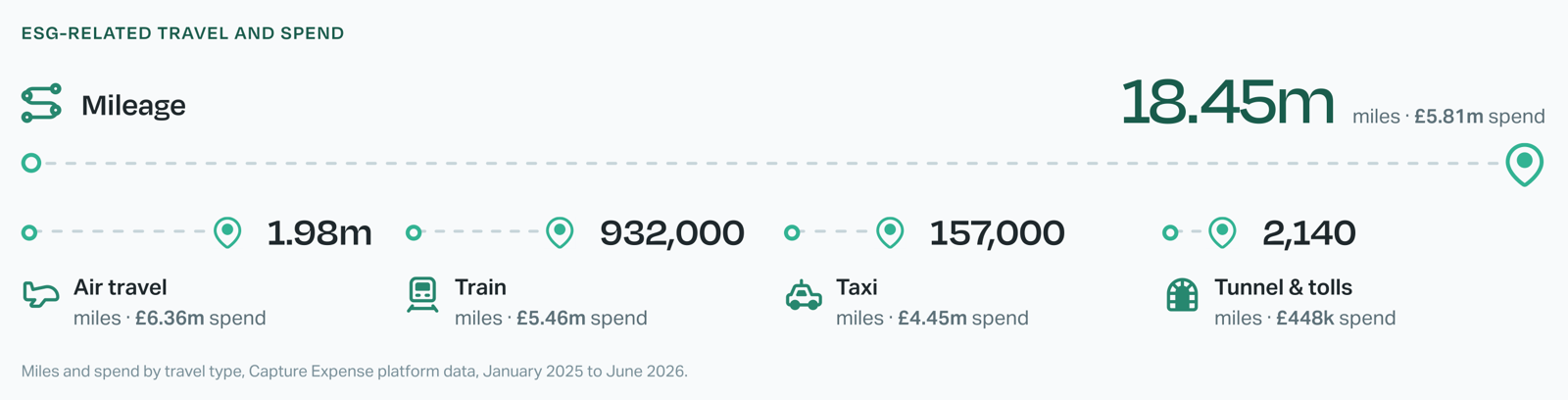
Mileage accounts for an estimated 87% of the carbon from this travel: 4,600 to 5,500 tonnes of carbon dioxide equivalent (tCO₂e).
“For sustainability reporting to be credible, it has to be built into everyday processes, not retrofitted at year end. Linking travel and expense data to recognised carbon factors at the point of entry gives finance teams the accuracy and auditability that regulators increasingly expect.”
James Rowell, Founder, Capture Expense
Business travel still matters
Organisations spent more than £15.7 million on hotels during the reporting period, with Premier Inn, Holiday Inn and Hilton among the most frequently claimed brands. UK business travel spending reached an estimated £40.3 billion in 2024, and analysis from the Global Business Travel Association suggests UK firms spend around £3 billion less on travel than the level that would maximise their commercial return.
Organisations aren’t cutting travel altogether. They’re becoming more deliberate about when it happens, and the ones getting it right can say why every trip happened and what it delivered.
The story behind the spend
Eighteen months ago, this report was largely about friction: what was going wrong, and why. This year’s data shows what happens once that friction starts to lift. Approvals are faster, rejections are falling, and AI is picking up the checking work that used to eat into a finance team’s week.
Finance teams that once spent their time correcting mistakes are starting to spend it understanding patterns instead. As the report puts it, the most valuable expense claim was never the most expensive one.
More guides
 Infographic
2025 Expense Trends Infographic
This infographic is built by real expense data from 460+ businesses and 371,000 claims, revealing the habits, hotspots, and clues behind spend.
Get the infographic Guide
Guide
Expenses Software for Construction
Capture Expense is the simple yet sophisticated expense software designed for the unique challenges faced by construction businesses.
Get the guide Report
Report: 2025 Expense Trends Revealed
Discover the trends driving expenses in 2025, pulled from over £60 million in claims analysed from January 2024 to June 2025.
Get the reportSee how simple expenses can be
Book a 30 minute demo with one of our team, or start a free trial and explore a ready-made workspace with your own data.
Rated 4.9 out of 5 on Capterra No credit card for the trial Reply within one working day